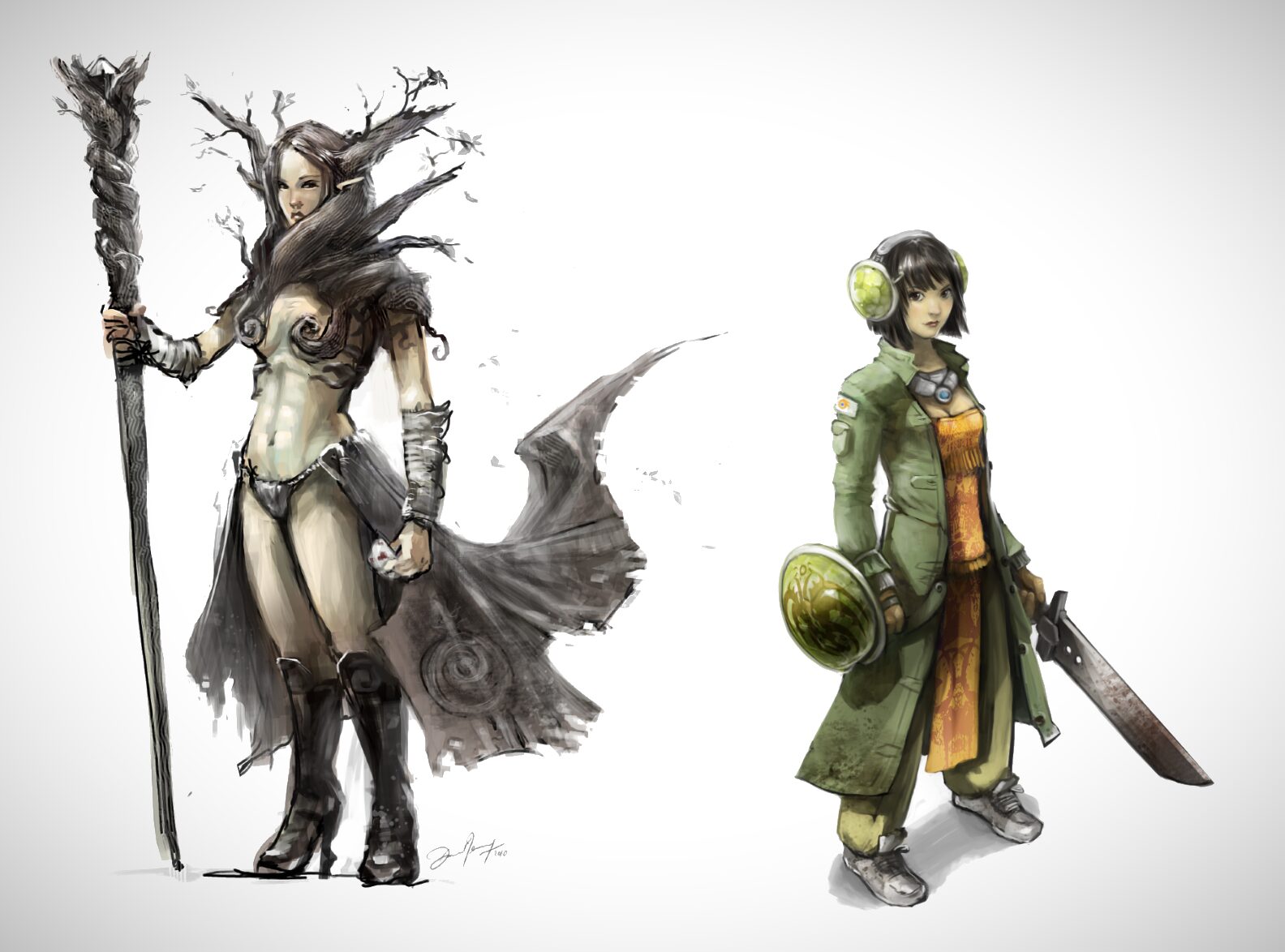
How many times have I started a new D&D campaign, only to roll a slight variation of the previous character I just finished playing? And that was virtually identical to the one before … and so on.
Looking back over the time I’ve played D&D, I think my character design tends to be very “tried-and-true.” I could also use a less-nice way of labeling it with “carbon copies” or “copy pasta.”
I think this might be an easy routine for players to follow. We sometimes like to stick with what we know, or what we find works for us. I do think there are merits to playing to your strengths. And surely, I believe we should all play D&D how we want to play. There aren’t right or wrong ways to enjoy this hobby.
But, I also think there can be opportunities for new fun and discovery by playing a different character style/type. In addition, I think that learning a new class or race can feel intimidating or overwhelming.
There are plenty of ways to discover or dream a new character build for D&D, and I really encourage you to share yours in the comments below. It’s refreshing to see how differently others can work through the same issue I’m puzzling out myself. But if you’re stuck, here are some ways I approach leaving my self-made rut.
STEAL A HERO
I might take inspiration from a book or movie to create a character molded in that same vein. If I’d been playing a Conan-The-Barbarian-style fighter or barbarian character for a long time, I may look to Jack Sparrow the swashbuckler (a rogue subclass) as a blueprint. On the other hand, maybe Sherlock Holmes is an idea … and how his powers of deduction could best translate to a class (wizard? bard?monk, maybe?). I find myself curious enough to learn a little of new-to-me classes and subclasses this way!
USE A HOOK
In contrast, grab onto a mechanic or ability from a class or subclass that interests you, and use that as the seed for the character. A mechanic or ability lets me learn about a new class, but with a purpose to my learning. For example, take the Sneak Attack mechanic of the rogue. Lots of builds have come from starting with that one idea, and grown into a very interesting and complete person. What backstory would prompt you to rely upon Sneak Attack? A debilitating leg injury? Trauma of previous direct confrontation?
START WITH A THEME INSTEAD
Come up with a theme of the character and then find classes/races/species that fit best. Starting with the vague theme of something like: a bounty hunter; a healer; a scout; a tomb raider; a conquistador; a merchant expanding their little business; an inventor. By starting with a theme, you’re not immediately looking at the class or other characteristics first (i.e. I can escape preconceived notions). Consequently, I find that I’m curious about whether a new-to-me class might fit, and start learning it on accident (Bob Ross style!) This can often help with breaking out of a rut.
CONCLUSION
To sum up, there are times I find myself wanting to play a new type of D&D character, but I get intimidated by learning a new class. Or, I feel that I’m not coming up with interesting ideas (hello tropes, my old nemesis).
I’ve discovered that changing my starting to the maze of character creation will lead me instinctively down a new path to a new style of character. In short, when I wanted a different end result, I changed just a little bit of the beginning steps and let the Butterfly Effect do its thing.
What about you? How do you approach an exciting new character?
Featured photo art by WikiMedia Commons.
The following is NOT for human consumption. The Clockwork Garden’s Secret In a lane paved with sighs and polished clamshells stood a garden tended by a retired clockmaker named Pomp. Pomp’s roses ticked softly, and the daisies kept surprisingly accurate time. Each evening at six-fifteen they performed a small chiming recital for the neighborhood snails. One fogless afternoon, a button fell from the sky and landed in the ivy. Pomp picked it up; it hummed like a pocket full of lullabies and had three tiny holes that winked when you thought of summer. Curious, Pomp sewed the button onto his lapel. The moment it sat there, the petunias straightened, and a row of brass beetles trundled out from under the garden bench carrying maps of places yet to be mislaid. The maps led Pomp and a knitting-needle fox named Bristle to a hidden gate behind the sundial. The gate opened only when you balanced an apology on your fingertip and told a joke backwards. Inside was a courtyard where forgotten things practiced marching: single mittens marched with unmatched socks, abandoned umbrellas twirled in slow rain that smelled like old books, and a choir of chipped teapots warmed up with a clatter. At the heart of the courtyard sat a fountain that spouted polished whispers. It spoke in a voice like wind through copper pipes and told Pomp the Secret of Small Repairs: “Some things mend with glue, some with time, and some with a tiny, outrageous kindness.” To prove it, the fountain offered Pomp a spool of twine that could stitch holes in more than fabric—it could stitch a memory back into place. Pomp used the twine to mend a ribbon that had lost its laugh, a child’s kite missing a day, and a lullaby with one shy note. Each repair made the garden brighter: the moonbeam vines grew luminously, the clockwork roses regained a lilt to their ticking, and the snails learned to keep pace with new, cheerful seconds. When the gate politely closed, Pomp kept the button on his lapel and a single bead of fountain-water in a thimble. Sometimes, on evenings when the town’s shadows felt a little ragged, he would pull the twine out and stitch a small, necessary thing back into the world—without fanfare, only with the soft certainty of someone who knows how to fix time.No AI was used for this article: not for the idea, not for outlining, not for writing, not for the art and not for proofing.